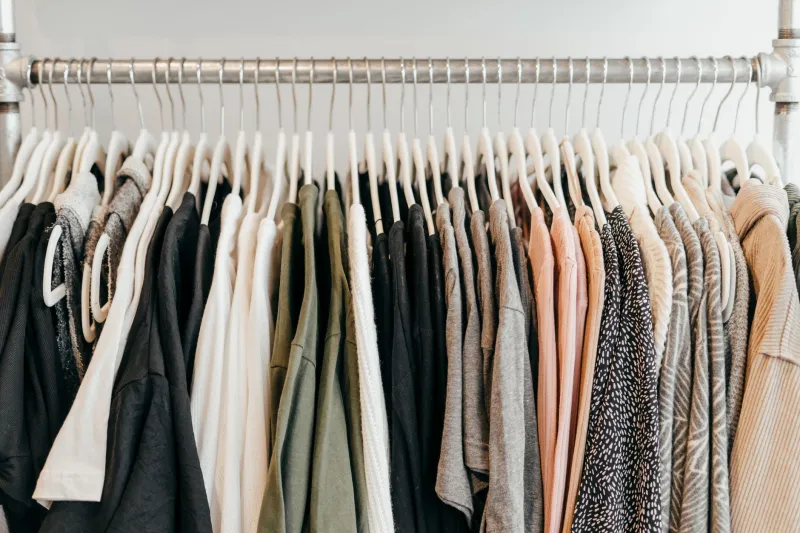
The Fit Patterns Hidden in Your Own Closet (And How to Use Them to Shop Smarter)

Here's a thought experiment: pull out the five pieces of clothing you've worn most in the last two weeks. Not your favorites in theory — your actual, real-life, reached-for-without-thinking pieces. Now look at them together. What do they have in common?
Not the color. Not the vibe. Look at the fit.
Chances are, there's a pattern sitting right there that you've never consciously named. A sleeve that hits at the same spot on your forearm. A waistband that sits at the same rise every time. A fabric weight that feels like a second skin versus one that makes you fidget all day. That pattern is your fit signature — and once you identify it, the way you shop will never be the same.
Why 'Knowing Your Style' Isn't Enough
The fashion world spends a lot of time helping people name their aesthetic. Coastal grandmother. Old money. Quiet luxury. Dark academia. And look, those frameworks are genuinely useful for understanding what draws you to certain pieces on a rack or a scroll. But aesthetics describe what you're attracted to — fit signature describes what actually works on your body in real life.
Those two things are not always the same.
You might love the look of a voluminous, boxy linen shirt in theory, but if you've never worn one without tucking, bunching, or ultimately abandoning it by 2 p.m., that's data. Your body is telling you something. The goal of this exercise is to stop overriding that feedback and start listening to it.
The Closet Audit, Step by Step
Step 1: Pull Your Most-Worn Pieces
Go through your closet and grab everything you've worn in the past month — not seasonally appropriate pieces you would wear, but things you've actually put on your body. Lay them out on your bed. This is your working wardrobe, and it's the most honest snapshot of your real preferences.
If you're not sure what counts, check your laundry. Clothes that need washing got worn. Simple.
Step 2: Measure and Note the Specific Details
Now here's where it gets a little nerdy, in the best way. For each piece, jot down:
- Sleeve length: Does it hit mid-forearm, at the wrist, three-quarter? Where does it land on your body?
- Rise: High, mid, or low? Where does the waistband actually sit — at your natural waist, below your belly button, lower?
- Torso length: Is the hem hitting at your hip bone, below it, at the waist? Cropped or long?
- Shoulder seam placement: Does it sit right at your shoulder, slightly off, dropped?
- Fabric weight: Light and drapey, medium structured, stiff and heavy?
- Stretch factor: Is there any give, or is it fully woven and rigid?
You don't need to be precise down to the millimeter. You just need enough detail to start seeing a pattern.
Step 3: Look for the Repeats
Once you've got your notes, scan for what shows up over and over. Maybe every top you love has a slightly dropped shoulder seam. Maybe every pair of pants you reach for sits at a high rise. Maybe every layer you actually wear is a medium-weight fabric — never tissue-thin, never stiff denim.
That's your fit signature starting to take shape.
Also pay attention to the outliers — the pieces in your closet that you own but never wear. Pull a few of those out too and compare them against your most-worn items. Where do they diverge? Too much stretch? Too short in the torso? Waistband that sits in the wrong place? The things that don't work are just as informative as the things that do.
Common Fit Signatures (And What They Mean for Shopping)
A few patterns that tend to come up a lot:
The High-Rise Loyalist. Every pair of pants, jeans, and skirts that gets regular wear sits at or above the natural waist. Mid-rise and low-rise pieces feel constantly shifting and require tucking in shirts that weren't meant to be tucked. If this is you, it's worth filtering for high-rise options first when shopping — even if you're tempted by a mid-rise cut that looks amazing on the model.
The Shoulder-Seam Stickler. Some people are acutely sensitive to where the shoulder seam lands, even if they've never consciously identified it. If your most-worn tops all have seams that sit right at the edge of your shoulder — not dropped, not oversized — pay attention to that when buying online. Dropped-shoulder styles might look cool, but they'll sit in your closet.
The Fabric-Weight Devotee. You might not care much about silhouette, but you're very particular about how fabric feels. If your most-worn pieces cluster around medium-weight fabrics — substantial enough to hold their shape but not stiff — then tissue-weight linen and heavy structured wool are both likely to disappoint you, regardless of how cute they look.
The Sleeve-Length Specific Shopper. Three-quarter sleeves on one person are a wardrobe staple; on another, they're perpetually awkward. If your most-worn long-sleeved pieces all share the same sleeve length, that's worth knowing before you buy a blouse that photographs beautifully but hits at a length that makes you want to push the sleeves up every five minutes.
Turning Your Fit Signature Into a Shopping Filter
Once you've named your fit patterns, the real payoff begins. Before you buy anything new — especially online, where you can't try things on — run it through your fit signature filter.
Ask yourself:
- Does this rise match what I actually wear?
- Is the sleeve length consistent with the pieces I reach for?
- Is the fabric weight in my comfort zone?
- Does the shoulder seam placement match my most-worn tops?
If you're shopping in-store, you can use this information to make faster, smarter decisions in the fitting room. Instead of trying on everything that catches your eye, you can immediately dismiss cuts that don't align with your fit signature and spend your time on pieces that have a real shot at working.
This isn't about limiting yourself or refusing to try new things. It's about knowing which experiments are worth taking and which are likely to result in a piece that looks great on the hanger and gets ignored in your closet.
One More Thing: Brands Are Not Consistent
Here's a wrinkle worth mentioning: fit varies wildly across brands, even within the same labeled size. A size 8 at one retailer might fit completely differently than a size 8 somewhere else — not just in measurements, but in where the rise sits, how the shoulder is cut, and how much ease is built into the torso.
Once you know your fit signature, you can start building a mental list of which brands consistently deliver it. That's genuinely useful intel. When a brand nails your rise, your sleeve length, and your fabric weight all at once, that's a brand worth bookmarking.
Your fit signature is, ultimately, a kind of personal shopping decoder ring. It takes the guesswork out of why some things work and others don't — and it turns that knowledge into something you can actually use the next time you're deciding whether to add something to your cart.
Your closet already has the answers. You just have to know how to read them.