Phone a Friend (About Your Outfit): The Case for Building Your Own Style Advisory Board

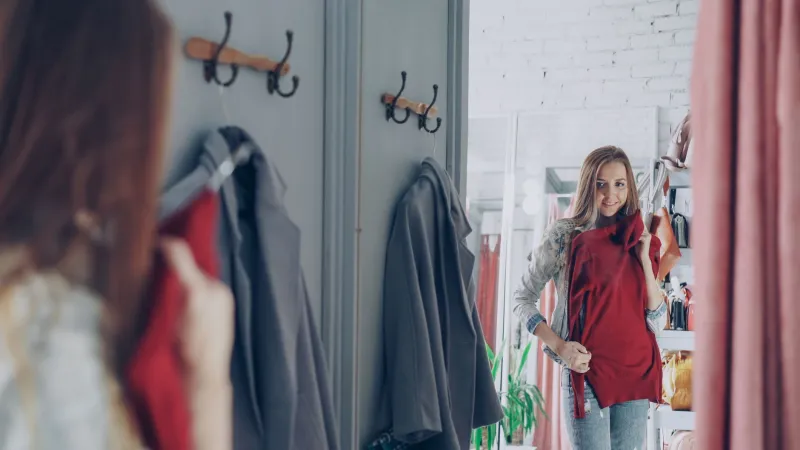
We've all been there. You're standing in front of the mirror, outfit assembled, and something feels slightly off — but you can't pinpoint what. So you do what any reasonable person does: you walk out into the living room and ask whoever's nearby, "Does this look okay?"
What happens next is either deeply helpful or completely useless, depending on who's on your couch.
Getting a second opinion on your clothes is one of those things that sounds simple but is actually layered with psychology, ego, and a surprising amount of miscommunication. Done right, it can sharpen your instincts, expand your style vocabulary, and save you from a lot of regretful purchases. Done wrong, it just muddies the water and leaves you second-guessing yourself in a dressing room for twenty minutes.
So let's talk about how to do it right.
The Difference Between Validation and Feedback
Here's the honest truth: most of the time, when we ask someone "does this look good?" we're not actually asking for feedback. We're asking for reassurance. We already know what we want to hear, and we're hoping the other person delivers.
That's not inherently bad — we all need a confidence boost sometimes. But it's worth being honest with yourself about which one you're after, because they require very different conversations.
Validation is emotional. It's "I feel weird in this, tell me I look fine." Feedback is practical. It's "I'm not sure this is working — what specifically isn't landing?" When you conflate the two, you end up either dismissing useful criticism because it stings, or taking lukewarm encouragement as gospel when it shouldn't be.
Before you ask someone for their opinion on your outfit, take ten seconds to check in with yourself: Do you want to feel better, or do you want to know the truth? Both are valid — but they're different conversations, and the person you ask (and how you ask them) should reflect that.
Why Outside Perspectives Actually Matter
Here's the thing about dressing yourself every day: you get used to yourself. You stop seeing what's actually there and start seeing what you expect to see. That blazer you've had for three years? You've mentally filed it under "classic" even if it's quietly gone a little boxy and dated. The shoes you wear constantly? You've stopped registering whether they're elevating your look or just... existing on your feet.
A fresh set of eyes doesn't have any of that history. They see the outfit as it actually is, not as a collection of memories and sunk costs.
This is especially useful when you're shopping. Someone physically present with you in a store or fitting room can catch things that a mirror misses — the way a jacket pulls across the shoulders when you move, whether a hem hits your leg at a flattering point, or whether a color is doing something weird under fluorescent lighting. These are real, practical observations that can save you from a return-worthy mistake.
Beyond the practical stuff, a trusted outside opinion can also push your style forward in ways you wouldn't get to alone. Sometimes it takes someone else saying "actually, that looks amazing on you" about something you'd never have picked for yourself to open up a whole new direction.
Not Everyone's Opinion Is Equal — And That's Okay
This is the part people tend to skip over, and it causes a lot of unnecessary confusion. Not everyone in your life is equipped to give you useful style feedback, and that has nothing to do with how much they love you.
Your mom might be incredibly supportive but genuinely not tuned in to what's trending or what works for your personal aesthetic. Your partner might have strong opinions but a completely different taste profile than yours. Your best friend might be brutally honest but not actually stylish in a way that aligns with your goals.
None of these people are wrong for being who they are. They're just not necessarily the right call for every style question.
Useful feedback comes from people who:
- Understand your aesthetic or are at least curious about it
- Can separate their personal taste from what works for you
- Are honest without being dismissive
- Know enough about clothes to say something more specific than "I like it" or "it's not really my thing"
Think about who in your life actually fits that description. It might be a coworker with an enviable wardrobe. It might be a friend who's always noticed and commented on clothes in a thoughtful way. It might even be an online community built around a style you admire. The point is to be intentional about who gets a seat at the table.
Building Your Personal Style Advisory Board
This doesn't need to be formal or weird — nobody's sending out calendar invites. But it is worth thinking about deliberately.
Start by identifying two or three people whose style instincts you genuinely trust and who know you well enough to be honest. These are your go-to voices for big decisions: a major purchase, a new direction you're considering, an outfit for something that actually matters.
Next, think about who you'd go to for a quick gut-check — someone who can give you a fast, reliable read when you're standing in a store and need a second opinion in real time. This person doesn't have to be a style authority; they just need to be honest and responsive.
Finally, consider a broader inspiration circle. This might be people you follow online, a style community you're part of, or even a few accounts that consistently reflect something you're drawn to. These aren't people you ask directly, but they inform your eye over time, which makes your own instincts sharper.
Between these three tiers, you've got a pretty solid system for when to lean on others and when to go it alone.
When to Trust Yourself Anyway
All of that said — and this is important — there are times when you absolutely should ignore every opinion but your own.
If you put something on and feel genuinely, unmistakably yourself in it, that feeling is data. It doesn't need to be validated by committee. Some of the best personal style moments come from pieces that nobody else would have picked for you.
The goal of building a style advisory board isn't to outsource your decisions. It's to have a reliable sounding board for the moments when your own judgment is clouded — by uncertainty, by attachment to a purchase you've already made, or by the kind of mirror-blindness that comes from seeing yourself every single day.
Your instincts are worth developing and trusting. Outside feedback is just one of the tools you use to develop them.
The Right Way to Ask
When you do ask for feedback, be specific. "Does this look okay?" is almost impossible to answer usefully. "Does this jacket feel too formal for a Saturday lunch, or is it fine?" gives someone something to actually work with.
The more specific your question, the more specific (and useful) the answer. Ask about fit, ask about occasion-appropriateness, ask about whether two pieces are fighting each other. Give the person you're asking a real target, and you'll get a real answer.
And when you get feedback you didn't want? Sit with it for a second before you dismiss it. Sometimes the most useful opinions are the ones that initially sting.
Style is personal, but it doesn't have to be solitary. The right people, asked the right way, can help you see yourself — and your wardrobe — a little more clearly.