Beige Flags: Is Your 'Effortless' Wardrobe Actually Just Boring?
Let's be honest about something. At some point in the last two or three years, a significant portion of the internet decided that the highest form of style was looking like you didn't care about style. Neutral palette. Clean lines. Nothing too loud, too bright, or too much. The quieter, the better. The more it looked like it cost $400 even if it didn't, the better.
Quiet luxury had its moment — and in a lot of ways, it was a genuinely useful corrective to the chaos of peak-logomania and the relentless trend cycle. But here's the thing nobody wants to say out loud: for a lot of people, the pursuit of effortless chic has quietly become its own kind of striving. And the result isn't a wardrobe that feels like you. It's a wardrobe that feels like a very tasteful, very beige void.
How We Got Here
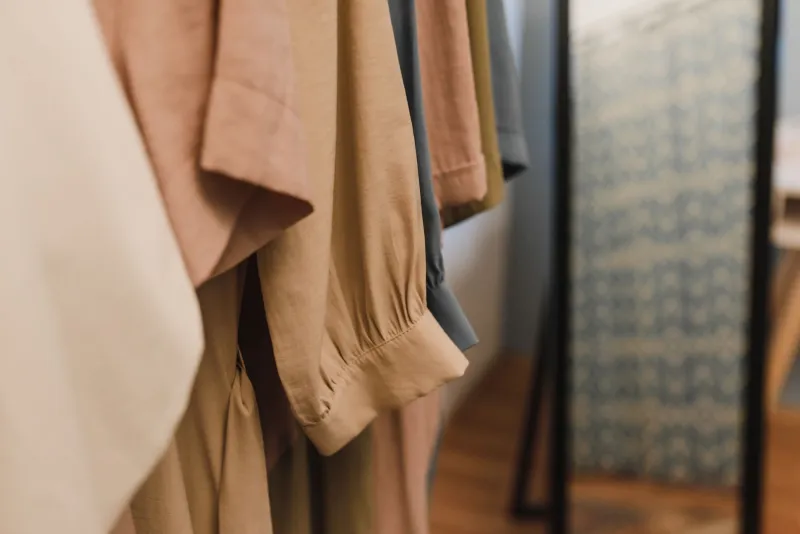
The quiet luxury aesthetic didn't come from nowhere. It emerged partly as a backlash to fast fashion's maximalism and partly as a cultural response to a few years of very loud, very chaotic everything. Shows like Succession gave us a visual vocabulary for old-money restraint. TikTok's algorithm rewarded the aesthetic because it photographed beautifully and was infinitely replicable. Suddenly, the formula was everywhere: camel coat, white tee, straight-leg trouser, minimal gold jewelry. Repeat.
There's nothing wrong with any of those pieces individually. The problem is what happened when people started treating the formula as the destination rather than a starting point. The goal shifted from "dress in a way that reflects who I am" to "dress in a way that signals I have taste." And those two goals, it turns out, can lead you somewhere very different.
The Irony of Trying Not to Try
Here's the central contradiction of quiet luxury as a mass aesthetic: the whole point is to look like you're not trying, but achieving that look requires a specific and deliberate effort. You have to curate the neutrals carefully so they don't look muddy. You have to find the exact right cut of trouser that reads as relaxed but not sloppy. You have to invest in fabric quality because the aesthetic has no other tricks up its sleeve — there's no pattern, no color, no statement piece to carry the look. The whole thing lives and dies on how well a $180 linen shirt drapes.
That's not effortless. That's a different kind of effort, dressed up in the language of ease.
And when the look becomes a trend — when it's being sold by every retailer from Banana Republic to Shein — it loses the one thing that made it compelling in the first place: the sense that the person wearing it simply has that kind of taste naturally, without trying. When everyone's wearing the same oatmeal palette, nobody looks effortless. Everyone just looks like they saw the same Pinterest board.
What Gets Lost in the Edit
The real cost of the quiet luxury obsession isn't financial (though a capsule wardrobe of quality neutrals is not cheap). It's personal. When you strip your wardrobe down to the most universally inoffensive version of stylish, you strip out the parts that are specifically, recognizably you.
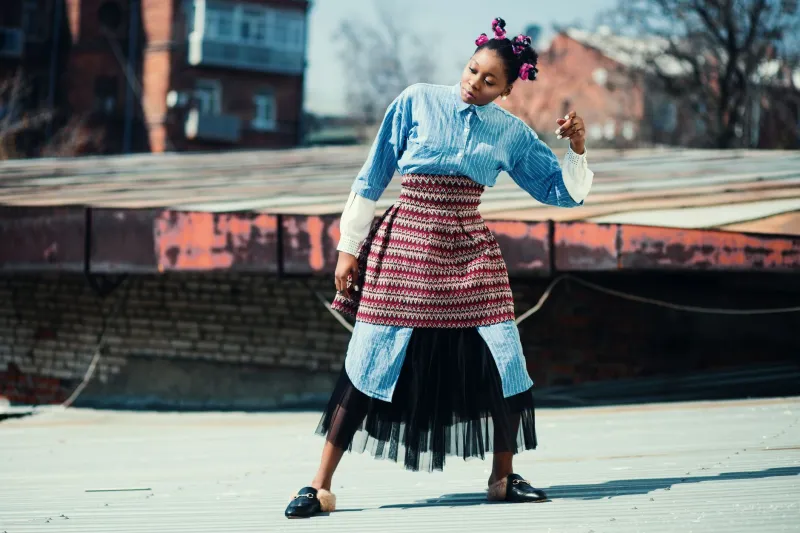
Think about the pieces in your closet that make you feel most like yourself. For some people, that genuinely is a perfectly cut camel blazer. But for a lot of us, it's something with a little more personality — a vintage band tee, a wildly printed silk scarf, a pair of earrings that are objectively too large for a Tuesday. Those pieces are the ones that start conversations. They're the ones people remember. They're the ones that make getting dressed feel like self-expression rather than a compliance exercise.
When we edit those things out in pursuit of a more "timeless" wardrobe, we're not simplifying. We're erasing.
The Sweet Spot Nobody Talks About Enough
The good news is that the choice isn't binary. You don't have to pick between a maximalist explosion of clashing prints and a monastic wardrobe of ivory and stone. Most people's personal style sweet spot lives somewhere in the middle — and finding it requires a different kind of question than "does this look expensive?" or "is this a classic?"
The better questions are: Do I actually want to wear this? And: Does this feel like me, or does it feel like who I think I should be?
A useful framework: think of your wardrobe in terms of anchors and accents. Anchors are the pieces that work with almost everything and genuinely reflect your lifestyle — your version of the basics, whatever that means for you. Accents are the pieces that have personality, that take a small risk, that make an outfit feel like it was assembled by a specific human being rather than a style algorithm.
The ratio shifts depending on who you are. Someone who works in a conservative office environment might need more anchors and fewer accents. Someone with a creative job or a bold personal aesthetic might flip that. Neither ratio is wrong. The problem only shows up when you let someone else's ideal ratio override your own.
Reclaiming Your Wardrobe From the Algorithm
If you've looked in your closet recently and felt vaguely bored by what you saw — even though every piece is technically "good" — that's a useful signal. It doesn't mean you need to throw everything out and start over with neon. It means it's worth asking which pieces you actually reach for versus which ones you keep because they fit the aesthetic.
Pull out the things you genuinely love wearing. Notice what they have in common. Maybe it's a color you keep returning to that isn't technically a neutral. Maybe it's a silhouette that's slightly oversized or slightly dramatic. Maybe it's a particular texture or print that makes you happy every time you see it. That pattern — that's your actual style. It's worth protecting.
Timeless is a fine goal. Invisible is not. The best wardrobes aren't the ones that look like they belong to no one in particular. They're the ones that look unmistakably like they belong to you.