Same, But Make It Fashion: The Surprisingly Liberating Logic of Dressing Like Yourself Every Single Day
There's a version of style advice that tells you variety is the whole point. Mix it up. Surprise people. Never wear the same thing twice in the same week. And then there's the quieter, more confident version — the one practiced by people whose outfits you always notice, always admire, and somehow always remember.
Those people? They're probably wearing a variation of the exact same thing they wore last Tuesday.
Welcome to the closet uniform — and before you write it off as lazy or boring, hear this out. Done right, it might be the most intentional, most you thing you've ever done with your wardrobe.
What We Actually Mean by a Closet Uniform
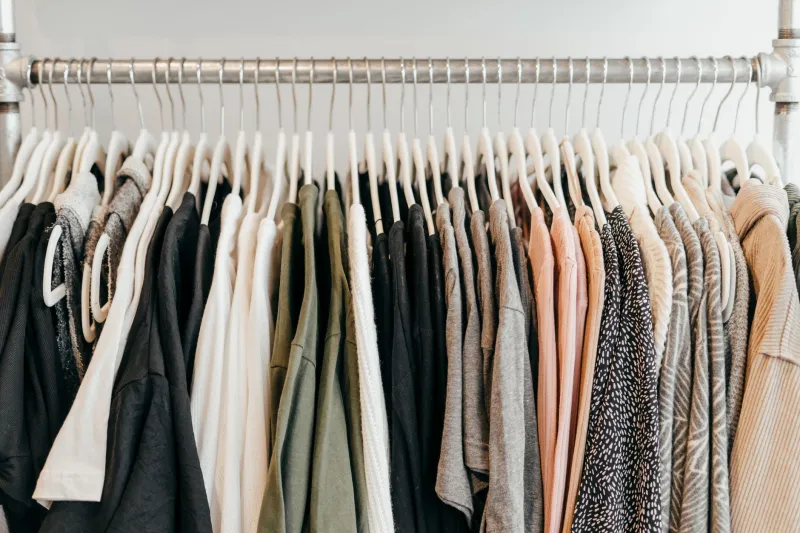
A closet uniform isn't a literal uniform. You're not talking about the same shirt, same pants, same shoes on a loop like some kind of style robot. What it really means is this: a consistent aesthetic framework. A set of silhouettes, fabrics, and color relationships that you return to again and again — not because you ran out of ideas, but because you ran into yourself.
Think of it like a signature. A graphic designer's logo work might span dozens of projects, but you can always tell it's theirs. The closet uniform works the same way. The details shift. The core stays put.
Some people land here accidentally. They look back at five years of photos and realize they've been wearing some version of wide-leg trousers and a relaxed button-down this whole time. Others get there on purpose — fed up with the decision fatigue of a closet stuffed with things that don't talk to each other.
Either way, the destination tends to look the same: clarity.
The Psychology Behind It (And Why It Actually Works)
Decision fatigue is real, and your wardrobe is one of the first places it hits you every morning. Research out of places like Columbia Business School has consistently shown that the more choices we face early in the day, the more depleted our decision-making capacity becomes as the hours roll on. That's part of why so many high-functioning people in demanding industries quietly adopt some version of a uniform — it's not a style retreat, it's a cognitive strategy.
But here's where it gets interesting from a pure fashion standpoint: constraint breeds creativity. When you're not trying to reinvent the wheel every morning, you start noticing the finer things. The way a slightly heavier cotton drapes differently than a poplin. The way the same neutral palette reads completely different in linen versus denim. The micro-variations become the conversation, and that conversation is a much more sophisticated one than "what should I wear today?"
People who dress this way often describe it as finally feeling settled in their style — not stagnant, but grounded.
Real People, Real Uniforms
We talked to a few people who've been quietly living this way for years.
Marcus, a 34-year-old architect in Chicago, realized about three years ago that every outfit he actually felt good in shared the same basic DNA: dark trousers, a quality crewneck or mock-neck, and clean leather sneakers or Chelsea boots. "I used to buy things that excited me in the store and then just... never wear them," he says. "Now I buy variations of what I know works. I have seven crewnecks in different weights and colors. That's my whole personality, and I'm fine with it."
Denise, a 41-year-old marketing director based in Atlanta, takes a slightly different approach. Her uniform is built around midi skirts, fitted turtlenecks, and one great bag at a time. "People think I wear the same thing every day. I don't. But I wear the same kind of thing every day, and honestly, I've never gotten more compliments."
And then there's James, a 29-year-old freelance photographer in Portland who essentially lives in straight-leg jeans, white or off-white tees, and a rotating cast of overshirts and outerwear. "The outerwear is where I play," he says. "Everything else is just the canvas."
Different lives, different cities, different aesthetics — but the same underlying logic.
How to Figure Out Your Own Baseline
If this resonates, the first step isn't shopping. It's auditing.
Pull out everything you've worn in the last month. Not everything you own — everything you actually reached for. Lay it out or photograph it. You're looking for patterns: recurring silhouettes, color families, fabric textures, the types of pieces that kept showing up.
Notice what you skipped over. The things hanging untouched aren't failures. They're data. They're telling you what your uniform is not.
Identify your anchor pieces. Every uniform has them — the one or two items that everything else orbits. For some people it's a perfect pair of pants. For others it's a specific jacket silhouette or a particular shoe style. Find yours.
Define your range. A uniform isn't a single outfit — it's a range. Once you know your anchor pieces and your core aesthetic, figure out where you like to play. Is it in color? Texture? Outerwear? Accessories? That's your creative zone, and protecting it is what keeps the uniform from feeling like a rut.
Building Outward Without Losing Yourself
Here's where the closet uniform gets genuinely exciting from a shopping perspective: once you know your baseline, every new purchase has a job to do. You're not buying things on impulse or because something looked great on a mannequin. You're buying things that slot into a system you've already built.
That changes everything about how you shop. You become harder to fool by trends that don't serve your aesthetic. You stop buying duplicates of things you already have in slightly worse versions. You start recognizing quality faster because you know exactly what you're looking for.
And when you do bring something new into the rotation — a piece that genuinely expands your range without breaking the framework — it lands differently. It feels like an addition rather than a disruption.
At The Wootique, this is honestly how we think about curation. Not "more," but more of the right things. A closet uniform is just that philosophy applied to your personal wardrobe.
The Counterintuitive Truth About Repetition
Here's the thing nobody tells you about wearing the same basic look on repeat: other people barely notice, and the ones who do tend to notice in the best possible way. What registers isn't sameness — it's consistency. And consistency reads as confidence.
The person who always looks put-together isn't necessarily the person with the most clothes. It's the person who's figured out what works and stopped second-guessing it.
Your best self might not be the most unpredictable version of you. It might be the most settled one — the one who walks out the door every morning already knowing exactly who they are.
That's not a limitation. That's a superpower.