Saturday Morning, Sorted: The No-Burnout Plan to Finally Know What's in Your Closet

Here's something almost everyone has in common: a vague, slightly anxious relationship with their own wardrobe. You know you have a lot of clothes. You suspect some of them are great. But when it's 7:45 a.m. and you need an outfit in ten minutes, none of that matters — because you genuinely cannot locate the black pants you were thinking of, and the top you wanted to wear is somehow inside out on a hanger behind a coat you forgot you owned.
The fix isn't buying more. It isn't a dramatic closet cleanout, either. It's something quieter and way more useful: actually knowing what you own. And the best time to do that? A Saturday morning when you've got nowhere to be.
Why Most Wardrobe Audits Fail Before Lunch
The classic approach — pull everything out, sort it into piles, make decisions — sounds logical until you're standing in a room that looks like a department store exploded and your motivation has completely evaporated. Decision fatigue is real, and when you're trying to evaluate 60 pieces at once, your brain just... quits.
The trick is to stop treating a wardrobe audit like a single massive project and start treating it like a series of small, satisfying tasks. Same goal, totally different energy.
Before You Start: Gather Your Tools
You don't need anything fancy. Grab your phone (for photos or a notes app), a pen and paper if that's more your speed, and maybe a cup of coffee. That's it. You're not reorganizing today — you're just looking. Resist the urge to start moving things around before you've actually taken stock.
If you want to go digital, a free spreadsheet or a simple notes list works perfectly. Some people swear by apps like Stylebook or even just an iPhone album labeled "My Clothes." Old-school index cards organized by category are surprisingly satisfying, too. Pick whichever format you'll actually use, not the one that feels most impressive.
The Saturday Morning Plan (Zone by Zone)
8:00 a.m. — Main Closet, Tops Half
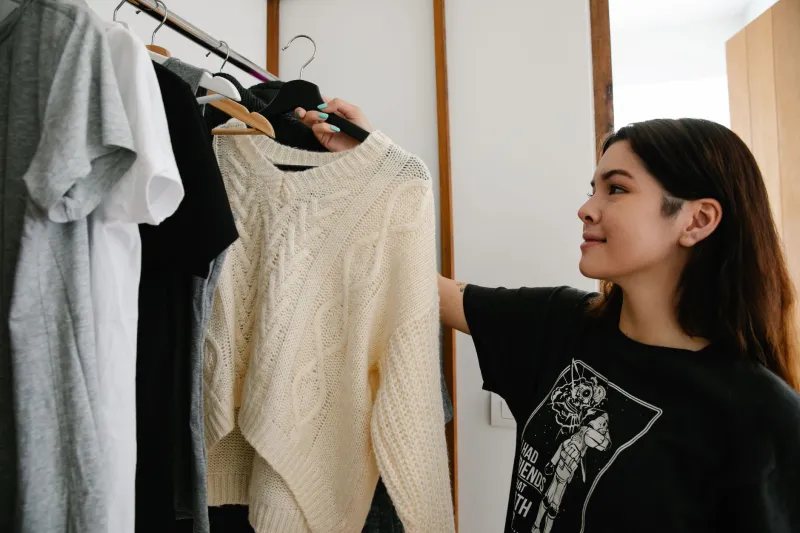
Start with just the tops hanging in your primary closet. Not drawers, not the spare room — just this one section. Go piece by piece and note the following: what it is, the color, and whether it currently fits and is wearable. That's all. Three data points.
You're not deciding what to keep yet. You're just making a list. This distinction is important. The moment you start second-guessing every item, you've left inventory mode and entered editing mode, which is a different (and much more exhausting) process.
9:00 a.m. — Main Closet, Bottoms and Dresses
Same drill. Move through bottoms, skirts, and dresses hanging in your main closet. Jot them down. If something is buried so deep you'd genuinely forgotten it existed, add a small star or flag next to it — that's useful information for later.
Take a quick photo of anything you can't immediately picture styled. You don't need a full lookbook shoot; a snap on the hanger is plenty.
10:00 a.m. — Drawers and Folded Items
This is usually where things get chaotic, so give yourself a little extra grace here. Folded items — T-shirts, sweaters, jeans, loungewear — tend to pile up in ways that make them invisible. Pull out each drawer and do a quick scan. You don't have to unfold everything; just get a rough count and note any categories where you're clearly overstocked (seventeen gray crewnecks, anyone?).
Pay attention to what's at the very bottom of each drawer. Those are your forgotten pieces — the ones that never make it into rotation simply because they're out of sight.
11:00 a.m. — Overflow Zones
Now check anywhere else clothes live: the spare bedroom closet, the under-bed storage, seasonal bins, that chair. Yes, the chair. Add these to your running list with a simple note about where they're stored. Location matters more than you think — if something is inconvenient to access, you're never going to wear it, no matter how much you love it.
What Information Actually Matters
You don't need to track size, purchase price, or brand for this to work. The details that genuinely pay off are:
- Category (tops, bottoms, outerwear, etc.)
- Color (helpful when you're trying to build outfits)
- Fit status (fits well, needs tailoring, doesn't fit currently)
- Condition (wearable, needs repair, worn out)
- Location (main closet, spare room, storage bin)
That's a five-column list, and it's honestly all you need. Anything beyond that is bonus territory — fun if you're into it, but not required for the goal here, which is simply awareness.
The Sunday Follow-Up (Optional But Worth It)
Once you have your list, Sunday is a good time to look at it with fresh eyes. Patterns show up quickly: the categories you're overstocked in, the colors you keep gravitating toward, the gaps you didn't realize existed. Maybe you have twelve going-out tops and zero versatile day dresses. Maybe you've been buying black pants on repeat without realizing it because you forgot you already had four pairs.
This is where the real value kicks in. Not in the decluttering (that can come later, if you want), but in the clarity. You now have a map of your wardrobe. That map will change how you get dressed, how you shop, and how often you stand in front of a full closet feeling like you have nothing to wear.
The Payoff Is Longer Than You Think
A wardrobe inventory isn't a one-and-done fix — it's more like a reference document you'll return to. Before a shopping trip, you can check what you actually need instead of buying a duplicate. Before a trip, you can pull up your list and pack intentionally. Before a seasonal refresh, you'll already know what needs replacing.
And the next time you're running late on a Tuesday morning? You'll know exactly where those black pants are.
The Wootique is all about building a wardrobe that works for your actual life — and that starts with knowing what you've already got. So pour the coffee, open the notes app, and give yourself a Saturday morning. Your Monday self will thank you.